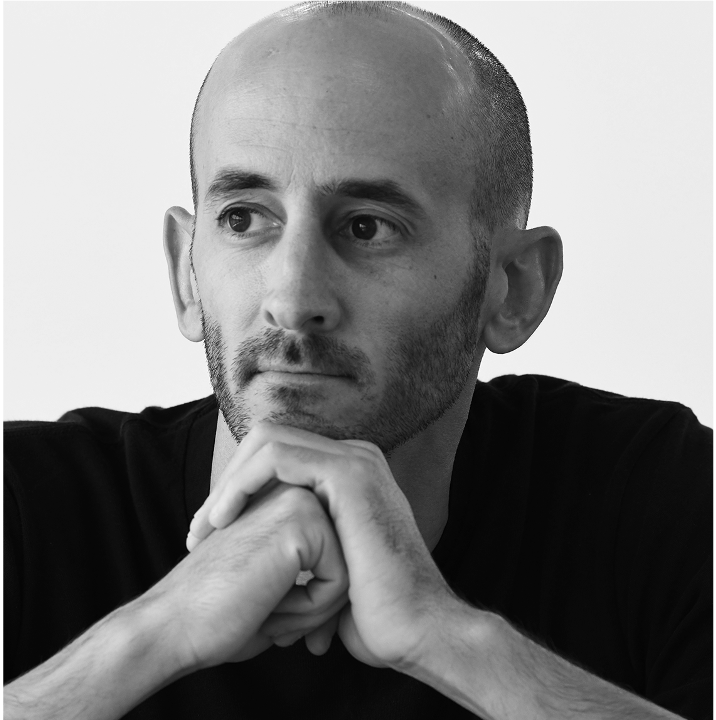
Asaf Benjamin
PhD candidate, Computational NeuroscienceDepartment of Brain Science, Weizmann Institute of Science
Research
Neuroscience × AI
I’m a PhD candidate in computational neuroscience at the Department of Brain Science, Weizmann Institute of Science, co-mentored in the Yizhar lab and the Chen lab .
I’m interested in how the brain represents social information and naturalistic social behavior, and in how ideas and methods from AI and machine learning can help us build better models of these neural codes. To study this, I combine wireless electrophysiology and wireless optogenetics in groups of freely interacting mice with large-scale, prolonged behavioral monitoring in semi-natural, enriched arenas.
On the modeling and analysis side, I use and develop diverse computational tools — from 3D pose estimation and action recognition through classical encoding/decoding models to modern, deep-learning-based, self-supervised representation learning and foundation-model-style approaches that learn shared representations across animals and sessions. While most of this work has yet to be published, an early version of it appears in our NeurIPS 2025 Brain&Body workshop paper: Towards foundation models of naturalistic collective social-neural dynamics .
Broader work
Selected publications
Beyond my main thesis project, I’ve worked as a data scientist on a range of collaborative projects at the interface of neuroscience, psychiatry, and data science.
See more of my publications and collaborations on my Google Scholar page .
· Structure–function relationships in mPFC. Modeling how anatomical features constrain functional connectivity between prefrontal neurons projecting to the amygdala .
· Mechanisms of rapid-acting antidepressants. Large-scale molecular and behavioral level analyses to understand how ketamine produces sustained antidepressant effects .
· Stress and mental health. A population-level studiy of the stress-related impact of Covid-19 .
· Optogenetic tool development. Development and validation of a bistable inhibitory optoGPCR for multiplexed optogenetic control of neural circuits .
· Clinical depression in youth. Using clinical, behavioral, and molecular measures to predict treatment response and identify biomarkers in children and adolescents with depression (in prep; with Dr. Maya Amitai).
Looking forward
AI for Science & Neuroscience for AI safety
I believe we are in the midst of one of the most consequential technological transformations in human history. AI is already reshaping science and society, and more capable systems are likely to have even deeper effects. Ensuring we realize the benefits of AI while mitigating its risks is therefore one of the most important challenges we have ever faced.
In terms of realizing the benefits, I’m particularly interested in using AI to improve scientific research. This is already happening (e.g. AmadeusGPT , Virtual Lab , Robin , SciSciGPT ) but I believe this is only the beginning. In terms of mitigating risks, I’m particularly interested in how ideas and methods from neuroscience could contribute .
I’m always happy to discuss these topics, as well as potential collaborations, so if this resonates with you, please get in touch.
Short bio
Before my graduate studies, I completed a BSc in Computer Science at Ben-Gurion University (BGU), where I graduated with honors, participated in special research programs, and did undergraduate research in theoretical machine learning with Dr. Sivan Sabato . I also worked as a software developer and researcher at SAP Labs, before moving into computational neuroscience and AI.
Awards & fellowships
- ISFN Social Neuroscience Conference – Best Poster Award (2026)
- Neural Basis of Natural Behaviors conference – Travel and Attendance Fellowship (2026)
- BINA Innovation Fellowship Award (2026)
- The Society for Neuroscience (SfN) Trainee Professional Development Award (2024, 2025)
- Azrieli Institute for Brain and Neural Sciences Trainee Travel Award (2025)
- The Weizmann Institute of Science Data Science PhD Fellowship (2023–2024)
- Junior Speakers Award, Neurobiology of Social Behaviour workshop (2023)
- CSHL meeting: From Neuroscience to Artificially Intelligent Systems (2020) Full stipend (registration, travel, accommodation; meeting cancelled due to COVID-19)
- Feinberg graduate school full fellowship (2016–2019; 2022–present)
- ASHALIM & DKALIM programs for outstanding students, Ben-Gurion University (including funding and research mentorship programs)
Mentorship
I’ve been fortunate to help recruit, work with and mentor a group of excellent students and research staff at the Weizmann Institute:
- Software development: Franck Touboul, Daniil Umanski
- Electrophysiology & optogenetics: Omer Izhaki, Maya Sheffer, Tommaso Biagini, Sergey Anpilov
- Behavior annotation: Eve Sheffer, Noam Israel, Nof Hadar, Shira Assor, Jenny Kucher
Talks & posters
- Talk: Neural Basis of Natural Behaviors conference, Athens, Greece (06/2026)
- Talk: Neurobiology of Social Behaviors Annual Meeting, Erice, Italy (09/2023)
- Talk: Azrieli Institute for Brain and Neural Sciences Trainee Seminar, Rehovot, Israel (02/2026)
- Poster: ISFN social neuroscience conference (02/2026)
- Poster: NeurIPS conference, BBFM workshop (12/2025)
- Poster: Society for Neuroscience (SfN) Annual Meeting (11/2025)
- Poster: European Social Club Annual Meeting (06/2025)
- Poster: Israeli Society for Neuroscience (ISfN) (01/2025)
- Poster: Munich Winter Conference on Stress, Munich, Germany (03/2022)
- Poster: FENS CAJAL course – Linking Neural Circuits and Behaviour, Bordeaux, France (09/2018)
- Poster: From Neuroscience to Artificially Intelligent Systems, CSHL (01/2020; abstract accepted, meeting cancelled due to COVID-19)
Teaching
-
Lecturer, Methods in Neuroscience – Theoretical
» Lecture: Computational Methods for Advanced Behavioral Analysis -
Teaching assistant, Methods in Neuroscience – Practical
» Processing and spike sorting electrophysiological recordings with optogenetic manipulations